
Shuckin’ & Gatherin’: A Lowcountry Tradition
If you've spent any time in Charleston during the cooler months, you know oyster season is a big deal. From backyard gatherings to community fundraisers, oyster roasts are a Lowcountry tradition. There's something about standing around a table of steaming oysters, with an oyster knife in one hand and a saltine cracker in the other, that just feels like home.
But long before oyster roasts became a favorite Charleston gathering, oysters played an important role in the region's history, economy, and culture.
A Tradition Thousands of Years Old
Long before Charleston was established, Indigenous communities along the South Carolina coast harvested oysters from tidal creeks and estuaries. Archaeologists have discovered ancient shell middens, large piles of discarded shells, showing that oysters were an important food source thousands of years ago.
As Charleston developed, oysters remained a staple of coastal diets. They were abundant, accessible, and could be prepared in many ways. By the late 1800s, organized oyster roasts had become popular social gatherings, with one of Charleston's earliest documented large public roasts taking place at Remley's Point in 1897.
The Gullah Geechee Connection
Oysters also have deep roots in Gullah Geechee culture. For generations, Black coastal communities relied on fishing, crabbing, shrimping, and oyster harvesting to feed their families and earn a living.
Charleston's historic Mosquito Fleet, made up largely of Black fishermen, played an important role in the city's seafood trade. While fishing was their primary livelihood, some also harvested oysters during the winter months.
These traditions were about more than food. Knowledge of the tides, waterways, and harvesting seasons was passed down through generations, connecting families to the land and water around them.
More Than Just a Meal
Today, a traditional Lowcountry oyster roast is as much about the gathering as the oysters themselves. Clusters of oysters are steamed or roasted, poured onto tables, and enjoyed with saltine crackers, hot sauce, and cocktail sauce. There's no need for fancy place settings, just good food and good company.
Oysters are also essential to the health of our coastal environment. Their reefs help filter water, provide habitats for marine life, and protect shorelines. That's why oyster shell recycling and reef restoration are so important to preserving this tradition.
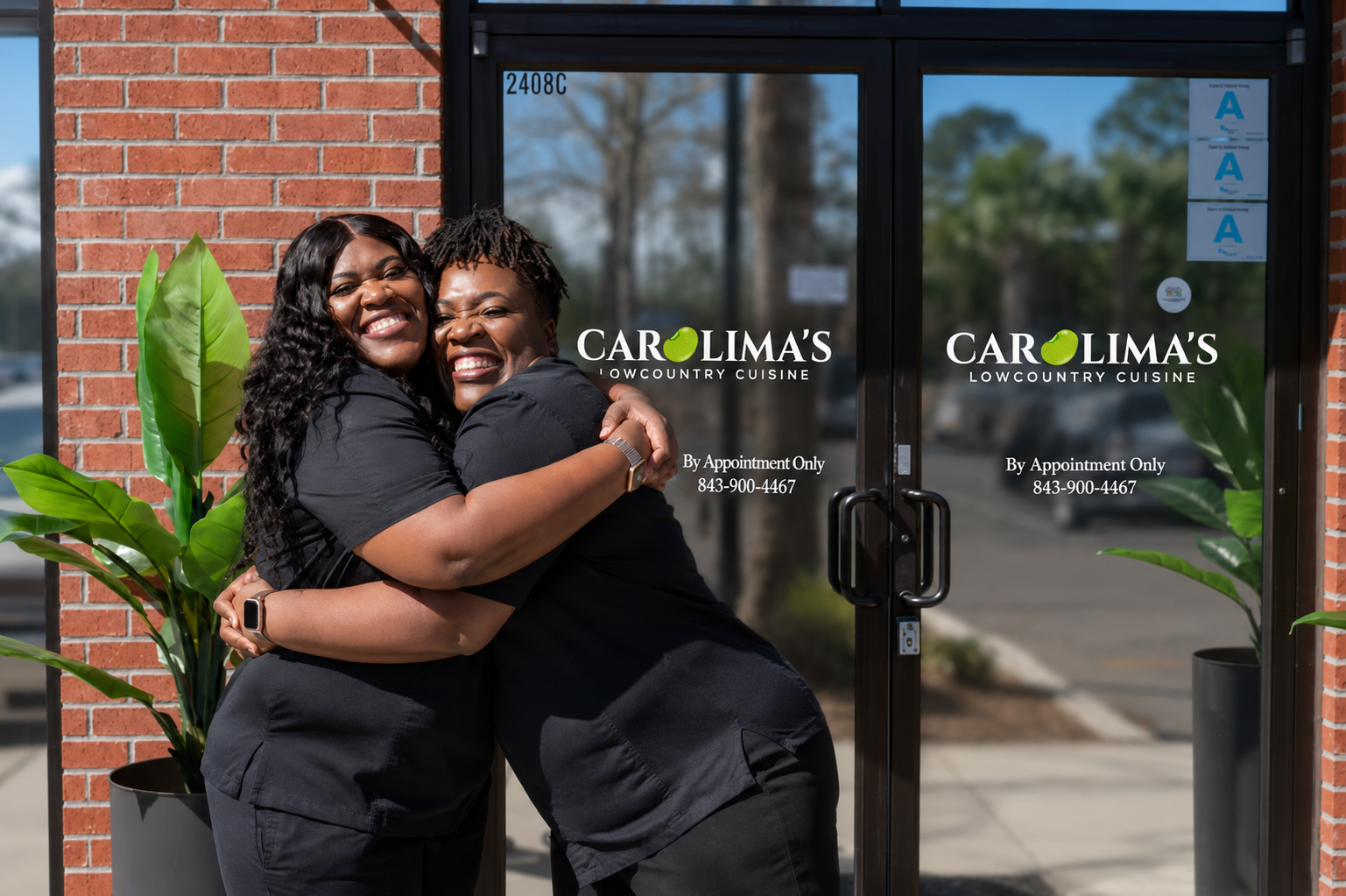
For Carolima's, oyster roasts represent what Lowcountry hospitality is all about: bringing people together through food. This Saturday, November 14, we'll host our 6th Annual Customer Appreciation Oyster Roast, made even more special as we celebrate 15 years of Carolima's.
It's our way of thanking the community that has supported us while continuing a tradition that has connected Lowcountry families for generations.
Because in Charleston, an oyster roast has never been just about the oysters. It's about the people, the stories, and the memories made around the table.